
More than 6 billion people worldwide consume milk and its products making dairy one of the most important sources of nutrition globally. Demand for dairy continues to grow, particularly in developing countries, which account for a significant share of global milk consumption. However, dairy production in tropical and subtropical regions often faces unique challenges. High ambient temperatures and humidity can negatively affect dairy cow productivity, resulting in lower milk yield, reduced milk quality, and poorer reproductive performance.
Cows are homeothermic animals, that require to maintain a stable core body temperatures to support normal physiological functions. When environmental temperatures exceed their comfort zone, cows experience heat stress, a condition that can reduce feed intake, impair metabolic efficiency, and decrease milk production. Studies have reported that heat stress can reduce milk yield by 10–25%, depending on its severity and duration
One way to address this is by implementing a fatty diet for cows. Fat is efficient for milk production and generates less heat compared to starch, fiber, and protein. Supplements are commonly added to dairy rations to enhance energy density, feed efficiency, milk yield, and milk fat, while also improving energy balance.
However, excessive supplementation with fats rich in unsaturated fatty acids (UFA) can adversely affect rumen function. High levels of UFA may disrupt rumen microbial activity, reducing fiber digestion and compromising the cow’s ability to efficiently utilize other nutrients in the diet.
Through its Optymax range, Apical has developed specialized animal nutrition solutions designed to deliver highly efficient energy while supporting normal rumen function. These products aim to help dairy producers improve productivity, particularly under the challenging conditions commonly encountered in tropical climates.
To evaluate their performance under practical farming conditions, a research collaboration was conducted between the Apical Innovation Centre (AIC) and the South-East Asia Food and Agricultural Science and Technology (SEAFAST) Center at IPB University, Bogor, Indonesia. Over the past year, independent feeding trials were carried out using Apical’s CS-85, PF-85, and BP-100 product lines. The study assessed the impact of these nutritional solutions on dairy cow performance, energy utilization, and overall productivity.
Research Approach by SEAFAST Center in Collaboration with AIC
SEAFAST conducted a comprehensive study to understand how cows digest their feed and how certain products affect their digestion and overall health. The study included both in vitro (lab-based) and in vivo (live animal) tests.
In the in vitro phase, SEAFAST used a lab-based method called the Tilley and Terry method to simulate the cow’s digestive process. This method helped measure the digestibility of different feeds, focusing on nutrient availability and the health of rumen microbes (the cow’s stomach).
Key factors measured in this part of the study include:
- Digestible energy: The amount of energy cows can get from the feed.
- pH: The acidity or alkalinity of the feed during digestion.
- Ammonia: Shows how well the microbes in the rumen are working.
- Volatile fatty acids: Important by-products of digestion.
In the in vivo phase, SEAFAST conducted a live study with cows in the mid-lactation phase to understand how different feed combinations affected their health and performance. It’s important to note that during mid-lactation, a steady and gradual decline in milk yield is natural.
The study used a randomized block design dividing the cows into four groups, each fed a different diet:
- Group 1: Basic diet of concentrate (a nutrient mix) and Napier grass
- Group 2: Basic diet with 2% BP-100
- Group 3: Basic diet with 2.2% CS-85
- Group 4: Basic diet with 2% PF-85
SEAFAST then measured the cows’ nutrient intake, digestibility, body condition, milk production, milk quality, and milk fatty acid profile.
Key Findings: Performance for Each Product
Milk Production [Calcium salt (OPTYMAX CS-85) vs NO FAT SUPPLEMENT]
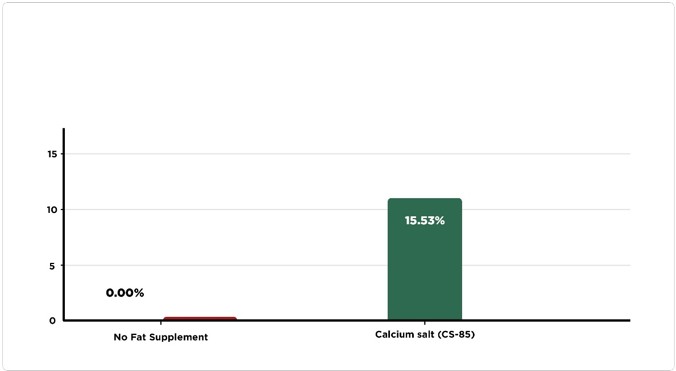
Milk Persistency (vs NO FAT SUPPLEMENT)
(How steadily cows keep producing milk)
- Calcium salt (CS-85): +7.69%
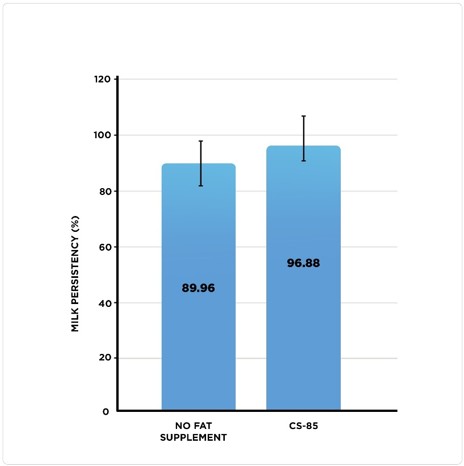
Body Condition Score / BCS (vs NO FAT SUPPLEMENT)
(Cow health and energy reserves)
- Calcium salt (CS-85): +8.23%
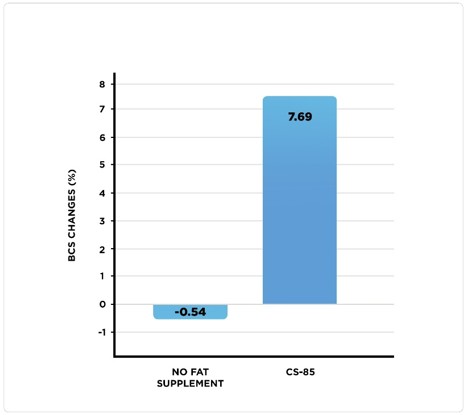
Milk Fat Content (vs NO FAT SUPPLEMENT)
- Calcium salt (CS-85): +4.43%
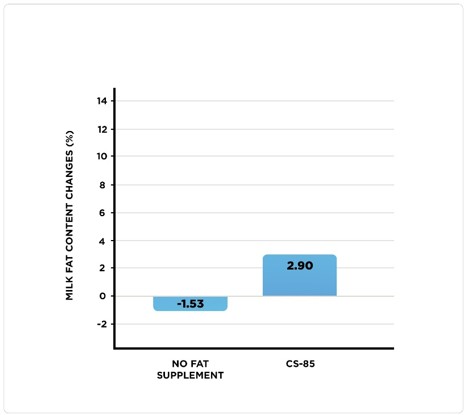
C18:1 cis Fatty Acid (vs NO FAT SUPPLEMENT)
(Natural fats that help improve the quality of milk)
- Calcium salt (CS-85): +5.13%
Rumen Fermentation
(How well cows process feed in their stomach)
- CS-85 (Calcium salt) showed steady and reliable performance throughout.
Digestibility
(How well cows break down and use their feed)
- At a 2.2% level, cows digested their feed just as well as those without supplements. This means the added fat did not interfere with normal digestion.
Energy Use
(How efficiently cows turn feed into milk)
- CS-85 provided stable energy across different levels.
Milk Production [Palmitic acids 85% (OPTYMAX PF-85) vs NO FAT SUPPLEMENT]
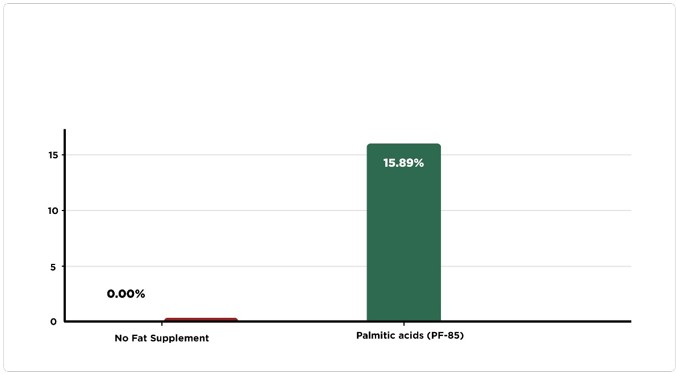
Milk Persistency (vs NO FAT SUPPLEMENT)
(How steadily cows keep producing milk)
- Palmitic acids (PF-85): +7.43%
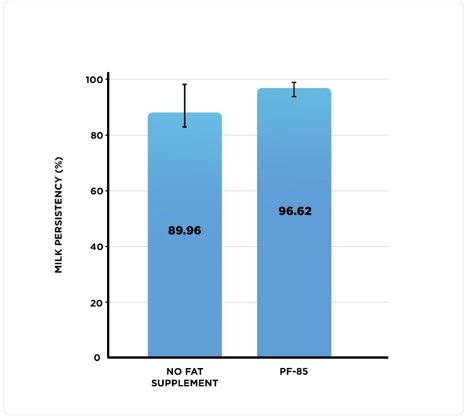
Body Condition Score / BCS (vs NO FAT SUPPLEMENT)
(Cow health and energy reserves)
- Palmitic acids (PF-85): +6.65%
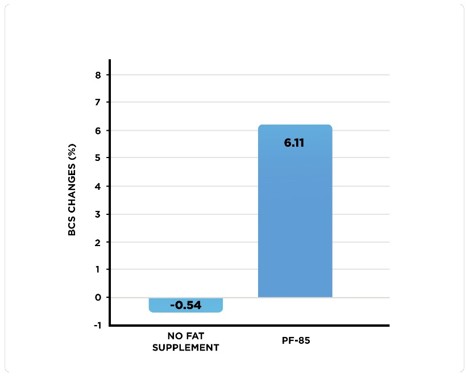
Milk Fat Content (vs NO FAT SUPPLEMENT)
- Palmitic acids (PF-85): +11.38%
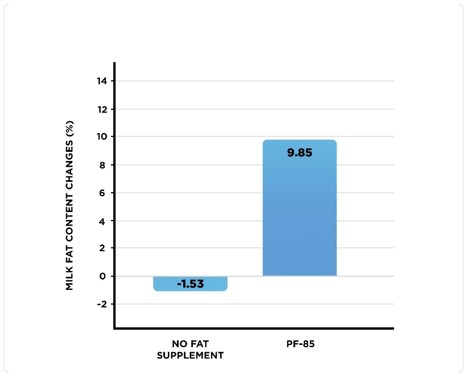
C18:1 cis Fatty Acid (vs NO FAT SUPPLEMENT)
(Natural fats that help improve the quality of milk)
- Palmitic acids (PF-85): +6.78%
Rumen Fermentation
(How well cows process feed in their stomach)
- PF-85 (Palmitic acids) is the easiest for cows to process, especially at the 2% level.
Digestibility
(How well cows break down and use their feed)
- At a 2.2% level, cows digested their feed just as well as those without supplements. This means the added fat did not interfere with normal digestion.
Energy Use
(How efficiently cows turn feed into milk)
- PF-85 (2%) provides the most energy for milk production.
Milk Taste & Quality
- PF-85 (Palmitic acids) gave milk a stronger and more appealing aroma.
Milk Production [Triglyceride (OPTYMAX BP-100) vs NO FAT SUPPLEMENT
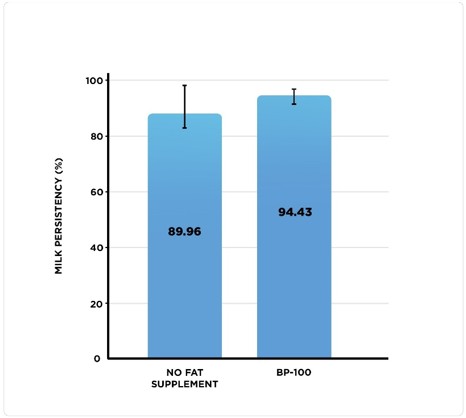
Milk Persistency (vs NO FAT SUPPLEMENT)
(How steadily cows keep producing milk)
- Triglycerides (BP-100): +4.97%
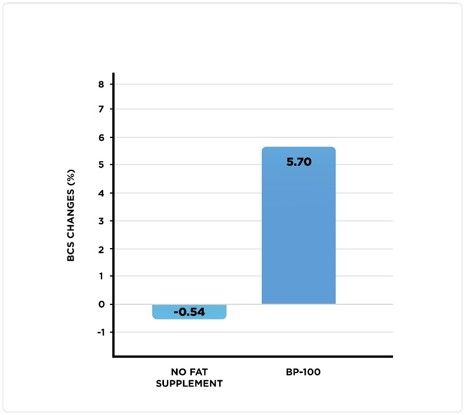
Body Condition Score / BCS (vs NO FAT SUPPLEMENT)
(Cow health and energy reserves)
- Triglycerides (BP-100): +6.24%
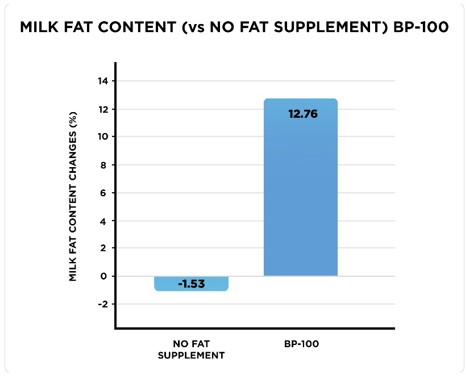
Milk Fat Content (vs NO FAT SUPPLEMENT)
- Triglycerides (BP-100): +14.29%
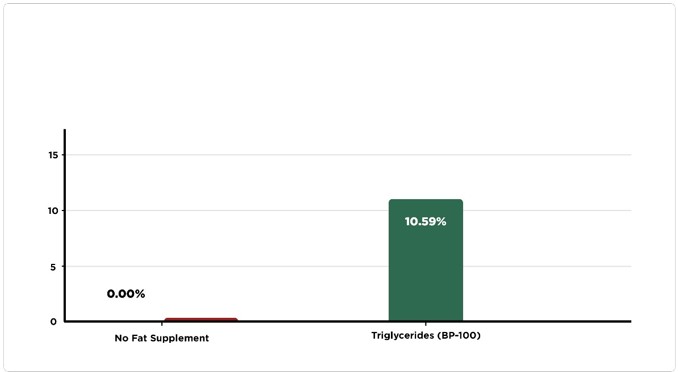
C18:1 cis Fatty Acid (vs NO FAT SUPPLEMENT)
(Natural fats that help improve the quality of milk)
- Triglycerides (BP-100): +4.96%
Rumen Fermentation
(How well cows process feed in their stomach)
- PF-85 (Palmitic acids) is the easiest for cows to process, especially at the 2% level.
Digestibility
(How well cows break down and use their feed)
- At a 2.2% level, cows digested their feed just as well as those without supplements. This means the added fat did not interfere with normal digestion.
Milk Taste & Quality
BP-100 (Triglycerides) produced milk with rich taste and creamier texture.
Study Results
The SEAFAST Center study demonstrated that all Optymax products positively influenced dairy cow performance. Cows receiving Optymax supplementation showed improved milk production, more consistent milk yield throughout the trial period, and better body condition compared to the control group. These findings suggest that the supplemented cows were able to utilize dietary energy more efficiently, supporting both productivity and overall animal well-being.
Each Optymax product exhibited distinct performance benefits. PF-85 delivered the highest energy utilization for milk production and achieved the strongest overall production response. CS-85 provided consistent and reliable performance across multiple parameters, supporting efficient nutrient utilization and sustained productivity. BP-100 contributed to improvements in milk sensory attributes, producing milk with enhanced richness and creaminess.
An additional finding was the increase in C18:1 cis fatty acid across all Optymax treatments. C18:1 cis (oleic acid) is a naturally occurring monounsaturated fatty acid commonly found in milk fat. Higher levels of this beneficial fatty acid are associated with improved milk fat composition and may contribute positively to sensory characteristics and nutritional quality.
Key Takeaways
The results of this study demonstrate that Apical’s Optymax products can serve as effective energy supplements for dairy cows, particularly under tropical production conditions. Cows fed with Optymax maintained better body condition, produced more milk, and showed a steadier milk flow compared to those without supplements. The added fats gave them extra energy without disturbing their digestion, helping them stay healthier and keep producing.
Among the products evaluated, PF-85 (Palmitic Acid) delivered the strongest overall performance. It provided the most energy for milk production, supported higher daily milk yield and milk fat, and improved the aroma and overall quality of the milk.
CS-85 (Calcium Salt), supplemented at 2.2% of the diet, demonstrated strong digestibility and nutrient utilization characteristics. Its performance remained stable across multiple production parameters, making it a reliable option for supporting dairy cow productivity.
BP-100 (Triglyceride) distinguished itself through its positive impact on milk sensory characteristics, contributing to a richer mouthfeel and creamier texture. In addition, all three Optymax products increased the concentration of C18:1 cis fatty acid, a desirable component of milk fat that may enhance both product quality and consumer acceptance.
Overall, the findings highlight the value of Optymax as a nutritional solution for improving dairy cow performance, supporting milk production, and enhancing milk quality in challenging tropical environments.
Want to see how Optymax can support better animal performance? Visit Apical’s Animal Nutrition page to explore the full range and learn how the right nutrition can improve energy, growth, and productivity.